Sunday, October 7, 2018

On Krapp Armaments and the History of Luxendoom, A LaserStorm Army

     Having repurposed my Prussian tanks from the now defunct Dystopian Wars for 6mm LaserStorm, I felt that they needed  to be an industrial army. An army from a major corporate tyranny, like Krupp. But not Krupp. Maybe.... Krapp? Yes! Thats a good name for a villainous arms manufacturer of interstellar might! And the best part is my opponents when they lose a battle will have to admit they were beaten by total and complete Krapp.

A Short History of the Krapp Armaments and Industries Firm:

       Far out on the edge of the eastern sector of the Milky Way lies a small system that is the heart of a massive corporate empire that produces billions of tanks, artillery pieces, aircraft, spacecraft, planetary defense systems, battledroids, mechs and even simple firearms. That system is the Grand Duchy of Luxendoom, and that corporate empire is the Galaxy famous arms manufacturer known as Krapp Armaments. Three hundred years ago, a humble arms dealer by the name of Matthias Krapp arrived on Luxendoom with a few credits in his pocket, a very special arc rifle, and a vision for the future of his house. His rifle was an inventive redesign of the then very new and dangerously unstable arc gun technology of other competitors. The Krapp rifle was both safe to use and could actually hit the user’s intended target. After a demonstration at the palace of the Grand Duke, wherein the Duke was able to shoot a dozen prisoners of the state hiding and fleeing through his private gardens, Krapp was granted a ten year contract to supply the ducal army with enough arc rifles to take over the other major planets of the Luxendoom System.


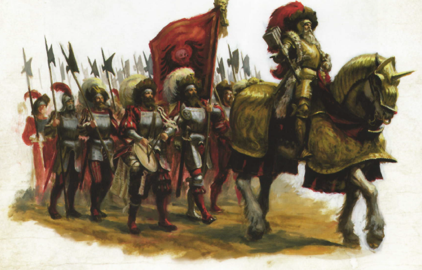
Luxen Soldat and Kapitan during the Hessiana-Luxendoom War. Armed with the latest Krapp Arc Rifle Mark II

       The Hessiana-Luxendoom War was a costly, but undisputed victory for the Duchy as the Krapp rifle proved more accurate and deadlier than the standard las rifles of the Hessian troops. By this point Matthias was given a baronetcy, and his surname changed to “Von Krapp”. The Krapp factory began producing high quality artillery and new “kampfwaggen” tanks that were both larger and thicker hulled than the standard Earth pattern tanks produced off the templates of the previous century. These new tanks and “kannonen” pattern artillery reduced losses considerably and overwhelmed the planetary defenses of Thyssendorf in the ensuing Thysso-Luxen War. Krapp artillery had proven so destructive that the world of Kurinia surrendered without a shot fired, after observers had witnessed the leveling of Thyssendorf’s capital city. The final planet of Saxenburg fell in a lightning campaign where Krapp tanks skirted the static defenses of the Saxens and literally bulldozed their way into the throne room of the very surprised King Arnulf III, crushing him under their steel treads.


The Krapp War Banner/Company logo.

     But fighting three wars in succession is a costly endeavor, and the Duchy bankrupted itself, burdening the serfs with war loans, and the amount of money both paid to and owed to Krapp Armaments put Matthias in a very unique position for an industrialist. He called in the debt owed to him. In quick succession the army that could not be paid revolted against the ducal house, the enterprising arms merchant bought off the Luxen general staff, and the Grand Duke found himself a prisoner in his own palace by the end of the day. Matthias’ terms were simple, that he should marry the Duke’s daughter, and that he step down from the throne and Matthias and his new bride be acclaimed co rulers of Luxendoom. Thereby the state’s debt would be considered forgiven, the army’s pay would be reinstated, and the general staff were now employees of Krapp Armaments.


The Luxen I Battalion, the “Ducal Guard” currently stationed on Thyssendorf, but frequently sent on campaigns of “resource acquisition” by the Grand Duke as this is considered the best drilled of the Luxen units. The large Kampfwaggen “Taanstafl” Mk II carries the latest Krapp superweapon, the Sturmlaser, capable of tearing through thick walls and armor plating in a matter of seconds.


     Today, Krapp Armaments is a thriving Fortune Five Million company with hundreds of world factories producing innovative new ways for galactic empires to murder each other. Krapp tanks are reliable and durable and Krapp artillery is second to none in terms of destructive capacity. Alfred Von Krapp, the current Grand Duke, has an eye to the future, seeking new resources to acquire and innovative designs to sell. He also has an eye to the past keeping the tradition of Krapp quality and high standards of excellence in every piece of Krapp product that exits the factory. Remember, if it’s not Krapp, it’s probably junk!


Alfred Von Krapp in his later years. Portrait taken for the cover of Fortune Five Million inside one of the local plants that produces rail stock and commuter vehicles for the employed masses of Luxendoom.

Friday, October 5, 2018

New Blog, New Lore, Old Minis.

       I’ve finally done it! I’ve completed a full size, big battle, tabletop army for the fantasy wargame Kings of War. Typically I stick with skirmish level games at 28mm because they’re cheaper and quicker to finish armies for but after a friend introduced me to KoW and I discovered I had a 2,000 point army of Undead in the making sitting around in a shoebox at home I decided to dive in and go for it. Having finished basing and painting my “Black Army of Ravensburg” I’ve been so inspired to start a second army (and possibly a third down the road) and write my own lore for each army and the world they share. To do this I’ve decided to create a second blog to post the adventures, folktales, and mythology of this world (I don’t really care too much for Mantica’s lore so I only make a passing accommodation for it in my own.). Below I have posted a link to the new blog. See you all there!


Wednesday, January 24, 2018

Gangs of Rome, A Gallic Conspiracy

     Recently bought into the game Gangs of Rome. Gonna keep this intro short and to the point as I have a badass backstory for my first fighter to get to. Essentially Gangs of Rome is like a “historical” version of Necromunda with each player having his own “gang” of 4-5 rather unsavory individuals with which he uses to establish his “family’s” dominance in Imperial Rome. I am playing as  Dominus (Latin for “Lord”) of House Donnadus, an ancient family of Gallic origin who have made their fortune in Rome and have taken to doing dirty deals with the Senators to crush those who oppose them at the Emperor’s court. Of course, not all problems can be solved with a Senator with greasy palms. A few denarii here and there and a word to some distant cousins at the fringes of the Empire in Gallia and Britannia, and some local thugs hired can do far more than even the might of a Senator can do to crush those who dare to oppose House Donnadus. 

     If course it’s not just ambition that drives Donnadus to hire a small army, it’s also a matter of vengeance. For the family of Donnadus was once descended from a Gallic cheif who fought under Vercingetorix’s banner, before the entire tribe was cruelly massacred or enslaved by Caesar in his conquest of Gaul. The chief’s youngest son and wife escaped and after some time established themselves in Rome with a small fortune they received from an unknown source. From that time the Dominii of  House Donnadus have sworn to get their revenge on the Imperial Family for their ancestor’s treacherous dealings with the Gauls.

     But the road to revenge is a long one, and along the way other goals and rival families have stepped in the path of this family of determined Gauls to disrupt and outright destroy them. Which brings us to the first fighter of House Donnadus:

      Lugdunus, The Hibernian.


     Lugdunus is from a noble family of Hibernia which was destroyed in a blood feud against a rival clan. The High King took his family’s land and wealth and enslaved Lugdunus and all his surviving kin. Sold to a Roman family in Britannia, he fled the island after slaying two brothers of that house when they attempted to force themselves on him. Arriving in Rome after many adventures, he was found in a tavern by the Dominus of House Donnadus when he violently stabbed a Centurion to death at being recognized as the murderer of his twin sons. The Donnadii hid him til the whole incident blew over and since then he has been employed by them as a very capable and valiant fighter.

Tuesday, December 5, 2017

Honours of War, a Review

     I have been a fan of 18th century wargaming for quite some time now and when I first came across Osprey’s “Honours of War” I immediately grabbed a copy before I really had a chance to look it over much less play an actual game. Every time I tried to introduce it at my local hobby store (when I lived in north Atlanta.) someone would respond with, “We don’t need that, we have Black Powder.” Well finally someone else got the Seven Years War Itch and I got my chance to play this ruleset and I must say it doesn’t disappoint. 


      Having tried a couple of games of Black Powder I’ve found Osprey’s “horse and musket” game to be faster playing and perhaps in my case, a better fit, coming as I am from a skirmish gaming background. While Black Powder does cover a wider range of late 16th-early 19th century warfare, Osprey has the luxury of multiple rulesets for different types of games and different eras. (Such as En Garde! And Pikeman’s Lament Which both focus on skirmish gaming the 17th century but in different ways. En Garde approaches with a storytelling, character driven aspect while PL goes at it with blobs of pike and shot and less story, more battle focus.)

      While BP only briefly focuses on the Seven Years War (barring of course if you buy the $30 a pop rules expansions like “The Last Argument of Kings”.)  Osprey’s HoW focuses on the conflict specifically, providing brief details on each army of the period and how they performed and even some detailed illustrations of uniforms. (Though if you really want a good resource outside of buying Osprey books, check out “Project: Seven Years War”, a vast wiki of detailed info on the period.) The main meat of the book, like any good volume from Osprey, is the rules. Brief, to the point, and backed up with easy to understand charts and tables at the back of the book, I found it fairly quick (less than an hour) to really get the rules down to memory to play a turn.
Warlord’s Black Powder supplement.

       To start, the game is played at the Brigade level. This means for 25 mm gamers a hefty but not too wallet breaking investment in infantry. The game does allow you to determine what size your battalions (the basic unit) can be model wise for gaming purposes. I played my first game in 15mm which meant two to three stands of six men each made a battalion and two to five of those a brigade. I do recommend smaller scales like 10-15 mm for this game simply because of the scale of warfare involved. This isn’t a skirmish between scouting parties, this is the main engagement! The game I played had three brigades to each side and additional artillery to boot. 

The Right Flank of the Prussian Army, comprised entirely of cavalry, with the Center made up of a brigade of line and fusiliers with attached brigade cannon. The brigades numbered 5 battalions each. A sizable number of troops in this game.

      Damage dealt is tracked by each battalion. A battalion (or squadron if you prefer the term for the cavalry) can take up to 5 hits total before it is destroyed. 1-2 hits has no effect on the shooting roll for the battalion, 3 hits causes a -1 modifier to be applied to the roll (which can add up with other modifiers such as “long range”, “if the battalion has moved this turn”, etc...), 4 hits causes the unit to fall back to regroup (1-2 full moves until either driven off table or regrouped), and 5 is an automatic rout. This may at first glance seem unfair if the opponent has a hefty amount of artillery or their musketry is better, but it does balance out and it also makes for a quick game. I read a review once that said this game gives artillery an unfair advantage. I don’t see it. Honestly I found that once my infantry closed to within effective musket range that the hits piled on much faster than the odd artillery salvo. 1-3 of my musket rolls were devastatingly effective (standard infantry for instance score 3 hits on a roll of 4 or higher, while standard artillery score only 1-2 on the same roll.) while only 1-5 of my artillery shots managed to hit anything much less score more than 1 damage. And that’s within “effective” (non modified die roll) range.

My battalion of Prussian grenadiers waits to open fire as my attached brigade gun opens fire... and misses on a poor die roll. At close range! With canister!

      Turns are done in this order: Roll for initiative. Roll to activate the Brigade’s movement. (Alternating back and forth til both armies have completed their movements.) Fire all artillery. Fire all muskets (if in range). Resolve all hand to hand combat. Remove destroyed/routed units from the table. And that’s really it. Osprey has kept it light and easy to memorize in this ruleset and the alternate movement of brigades keeps the guessing game that is the true mark of a good wargame in the fore. 

      The game also provides nice flavoring for the period with a  “National Characteristics” section at the end of the book. Part of what makes the game unique is the qualities you can assign to your units which have an effect on die rolls. Troops can be classed as ether “inferior”, “standard”, or “superior”. This helps keep those Austrian militia units from being up to par with those British grenadiers, without being too game breaking. Commanders of brigades/generals can be rated as “dithering”, “dependable”, or “dashing”. Which give corresponding bonuses or negatives to each command roll made. For instance, a brigade of “superior” grenadiers led by a “dashing” commander will be able to rally much quicker from wounds, throwing off 2 hits instead of just 1. When the “superior” grenadiers shoot their score is usually 1 more hit than “standard” grenadiers on the same roll. 

      “National Characteristics” add additional bonuses/negatives to commanders.  For instance:

      Saxon commanders that are Dependable and Dashing get -1 to their move initiative. They have to roll one higher to move the brigade. Whereas for a formation change (such as forming squares) they only deduct half a move rather than a full move.

      Likewise British commanders give their troops a +1 to their fire initiative, giving them far better musketry rolls than other nations. The rules even allow for all British infantry to be classed as “superior” if one wishes. (The author goes off the information from the period, such as how the British troops were trained to give a higher rate of fire, the performance of the army at Minden, etc...)
      
      The game typically ends with a third to half of one side routing off table, or if specified objectives are met.

An unfortunate misuse of cavalry on both sides led to two full brigades of cavalry sitting atop a hill staring each other down in case the enemy charged first. Leaving the other brigades to shoot it out with no support other than artillery which the Austrians excelled at that day. Were I to do it again I should have kept the fore squadrons as a screen and funneled the rear troops to the opposite end of the field to make a difference at the objective!
A full view of the engagement at Corrugasberg. (We used an African village with corrugated metal roofs for lack of a proper Silesian one.)

      The artwork is standard Osprey excellence and precision, with full color illustrations of painted armies interspersed with artwork from other Osprey volumes on the conflict.

     There’s even a set of tables and charts in cheat sheet format at the back of the book for quick reference. The only flipping through the book I had to do to check on something not specified in the tables was the movement and firing ranges for other scales which can be found on page 56. 

      I highly recommend Keith Flint’s “Honours of War” by Osprey Publishing as a great addition to any rulebook collection and a good alternative to the much thicker volume of Black Powder. It’s a quick pick up and play game that keeps things fresh and doesn’t bog the player down in unnecessary rules lawyering and math calculations. And for $20 quite reasonably priced. For those who play at my local hobby store, there are a few of us who plan to make this our regular go to game for Saturday mornings, and readers of this review that game there are welcome to take up the colors and join us for our “Gentlemanly Wargaming” ;) 

Sunday, November 5, 2017

Dragon Rampant and OldHammer, An Introduction to the armies of Altgard. Part 1

     With GW’s mangling, bungling, horrifyingly ham fisted destruction of the Old World, I have endeavored (like so many other Warhammer grognards) to preserve the memory of the Old World and what I loved about it. (And it doesn’t involve Sigmarines!) So with Dragon Rampant and Kings of War becoming the haven of many an Old Worlder, I have joined in the fun by “reconstructing” my own Empire army along with Dwarves. Mainly with the help of such wonderful plastic Landsknecht kits from Warlord and of course Mantic’s take on the Dwarves and Undead. So here are my constructed states, so far, for my own “Altgard” or “Old Earth”, this article centering on the “MittleReich” or the “Middle Empire” of Men, known here as the Volk, or “Folk” in their own tongue:

The Free City of Sunngarde:

      Situated on the banks of the River Teustch, Sunngarde is a glittering, wealthy merchant city with a burgeoning trade along the river. Her regiments are made of disciplined and well paid mercenaries from all corners of the Empire and several Orders of Knights also have keeps within her mighty walls, guardians of the temple of the city’s patron god, Sunna, the Sun God. God also of mercantile, and as such a fitting patron for the “City of Merchants”. Ruled over by the House of the Burgomeisters,  (made up of the wealthiest Merchant Lords of the City), Sunngarde makes its wealth through trade and manufacturing, as well as renting out her large army to other rulers at almost, but not quite, unreasonable rates. The main army of Sunnegarde is financed by the Burgomeisters and is composed of the most disciplined regiments that can be provided by the Mercenary Guild which manages the city watch, and the Armory, among other things. Many a sellsword flocks daily to Sunnegarde in search of his fortune and the City of Merchants has no shortage of able bodied volunteers to fight for her interests on the battlefield. A former capital of several Emperors of the MittleReich (Middle Empire, or the Middle Realm), Sunngarde’s citizenry pride themselves on this fact and often claim to hail from the “Old Capital” when asked where they’re from. Though a “free city”, Sunngarde is often at war in some form or other with the rest of the Empire as the city’s immense wealth makes for a rather “golden egg laying goose” for the various much leaner states surrounding her. Though to those who know the tale, killing the goose will also kill any chances of getting more golden eggs!

Regiments of Sunnegarde.

The Duchy of the Hernevald/City of Horneburg

     Further north of Sunnegarde lies the dark and brooding forest of the Hernevald, birthplace of the MittleReich and of the Teuschten Volk as a whole. Here is the sacred hunting ground of Herne, the Wild Huntsman, God of the Forest, Virility, Fertility, and all Wild Things. Here is celebrated the winter festival of Yolnacht, where devout worshipers of Herne make a pilgrimage to the “Gerichstlinde”, or “Doom Linden”, a gigantic linden tree beneath which the first kings of the Volkisch tribes made an oath of unity under Siegfried, founder of the Empire. It was here that the first seat of government was held and a city in time grew up around this sacred tree, now called the Horneburg, City of Herne. It is more like a large town rather than a bustling city, trade flows in rough, uneven patterns through the region and most of the residents of the Hernevald live on farmsteads in the valleys and mountains around the city rather than in it. The Duke of Hernevald, currently Otto Von Barentz, holds court in the Jaegerhoff, a stoutly fortified castle at the end of the Seigfriedstrasse, the main street that winds its way up the hillside through the center of the city. Here also is located a small temple to Herne, though any true hunstman (the most devout followers of the Hunting God of course!) will tell you that the true sanctuary of Herne is the forest itself, and therefore the most magnificent of any temple to the gods. The army of the Hernevald is more often than not a militia made up of farmboys and hunters that will meet up at the Gerichstlinde when the Duke sends out a general call to arms. The most professional “army” the Hernevald has is the Duke’s personal guard and the well trained Horneburg Watch. These along with a handful of mounted nobles and their retinues form the backbone of the Hernevald’s military might. But what the forest province lacks in professional troops, it more than makes up for in marksmen, for the jaegers of the Vald are among the most storied sharpshooters in all the Empire.
Soldiers of the Horneburg Watch
Coat of Arms of the Hernevald showing the golden stag’s head sigil of Herne with the Red Griffin of Siegfried holding a bishop’s mitre over the cross of the Siegfried Cult.
Banner of the Duchy of the Hernevald

Coat of Arms of the Horneburg, showing the Gerichstlinde at the heart of the city.

The Principality of Silezenland/Free City of Potzdorf

     Silezenland is a cold country, on the eastern edge of the MittleReich, it is also a very different place from the rest of the Empire. Originally Silezenland was a barren waste home to many forest dwelling and steppe nomad tribes that came from the same place as the Volk but branched off into their own language and culture. Often considered barbarians by the only slightly more civilized Empire to the west, the Silezen tribes were conquered by Kaiser Sigismund II two hundred years before the reign of the current Emperor. Riding atop a mighty Red Griffin, Ironclaw, Sigismund slew a great many tribesman in the name of his ancestor god Sigfried, and built a mighty industrial city on the banks of the River Osric. The city of Potzdorf. Here stands the current capital of the Empire, a city of technological marvels, of great cannon factories, and of the College of Sorcery, which sanctions professional wizards and issues permits to practice their art within the Empire. The Emperors of the Red Griffin line, the supposed bloodline of Siegfried himself, holds court in the “City of Magic”. The factories produce gunpowder weapons of all kinds and the School of Engineering is continually at work creating all sorts of new and fantastical weapons for the Imperial armies as well as tools for the Empire as a whole. It’s most famous inventions being bomb lobbing War Balloons, and the dreaded Steam Tank. Here also resides the mighty, sky piercing Cathedral of Seigfried, wherein resides the Arch-Patriarch of the Church of Seigfried. Seigfriedism is, compared to the other cults of the Empire, relatively new. Siegfried disappeared after reigning a hundred years and it is believed he sleeps beneath one of the mountains of the Hernevald, interceding on behalf of the Volk and will one day awaken and return to lead the Volk in their last, desperate battle at the End of Days. The army of Silezenland is chiefly formed around the Army of the City of Potzdorf, whose regiments, being directly controlled by the Emperor or one of his subordinates, are among the best drilled and finest in the Empire. They are also the best led. Stunning uniforms of soot black and crimson red bedeck the proud soldiers of the Kaiser. The Imperial Arms of the Red Griffon Emperors (der Rotergreiff House) adorns the banners of the Imperial Army and when the Kaiser takes to the field with the full military might of the MittleReich, it is truly a wonderous sight to behold. Row upon row of cannons, musketeers, and occasional steam tanks adds thunder and fire to the Imperial battle line, while scout Balloons of the Imperial Luftballoon Corps reveals the enemy to the Kaiser’s generals while sanctioned wizards call forth mighty storms of magic to harry their enemies. The current Emperor is Ludwig Rudolf III, Kaiser vom MittleReich, Uberkonig von der Volk, Prince of Silezenland, and Grand Count of Potzdorf. Ludwig rides into battle atop his mighty griffin, Firebeak, and wields the ancient runesword of his mighty ancestor Siegfried. The runesword itself is a holy relic of the Church and can only be drawn from its sacred linden branch (once part of the mighty Gerichstlinde of Horneburg before a thunderbolt struck off the branch that held the sacred sword during the reign of Emperor Sigismund II.) by a descendant of Siegfried. Upon the death of the ruling member of Siegfried’s house, the sword is resheathed into the sacred branch til such time as a worthy descendant can claim it.
One of the Imperial regiments of Potzdorf, from the minor Nuln foundry district near the river.
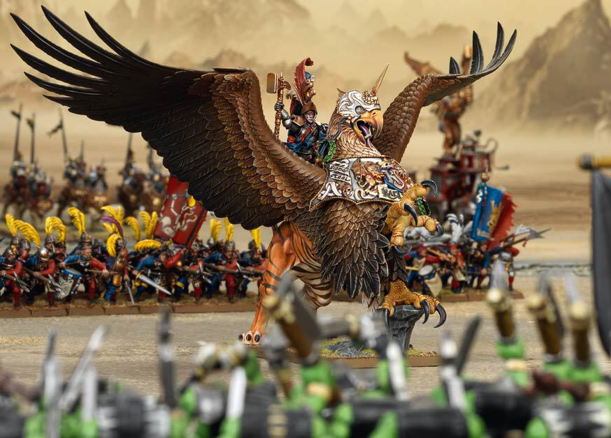
Kaiser Ludwig atop his griffin Firebeak leading the charge against some troublesome greenskins that plague the region.


Sunday, October 1, 2017

Battletech Mercenary Corps

     I've recently turned my brush back to Battletech for some new mech companies for Alpha Strike which I can't wait to start playing! I have a sizeable collection already with about 4 companies worth of House Steiner/LC mechs, 2 companies of House Marik/FWL, and a newly growing company of House Centrella/MoC. I tend to favor mercs over the regular line units so this article will outline in detail the two merc companies I have painted up, plus the new one on the way.

Euler's Hussars (Formerly the Prague Lancers)

     Formed as an emergency measure against invaders from the Cappellan Confederation during the Andurien War, the Prague Lancers performed admirably against Liao mechs, defending Prague IV's capital, Dubrovnik. The Banate of Krum fought as a member state of the FWL and after the end of the Andurian War, sent troops to "restore order" in outlying Andurien worlds. An attempted coup of the Krumite government created a crisis where the Ban (King/Prince), declared several worlds in open rebellion and asked for support from the FWL. Betrayed at court by his enemies, Grand Duke Wladislaw Euler, who helped found the Lancers, was forced to flee to Dalmatia Prime. Arriving there with only his Cyclops mech and a few household techs, word spread among the Lancers of Duke Euler's betrayal at the hands of the Krumite court, and quietly left the Banate to join forces with Euler. 

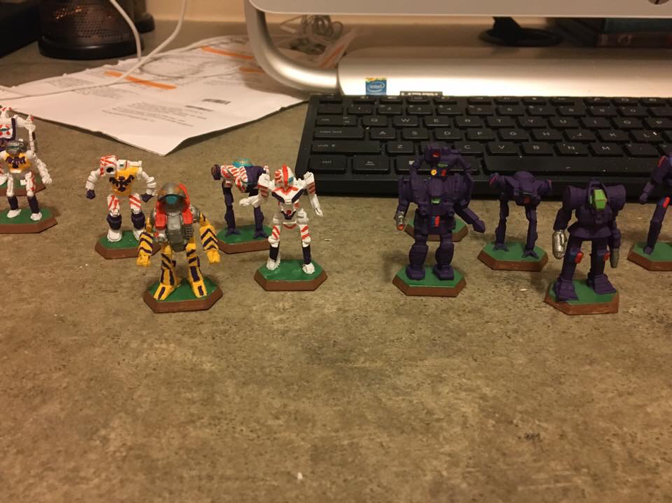
    Renaming themselves "Euler's Hussars" they fought admirably against both the rebellious Andurian worlds and the Krumite forces. After routing the Ban's personal army on Ladoga, the Hussars were offered employment by another lord who needed their services fending off Steiner invaders some 20 light years away in another system. Since that time Euler's Hussars have made a name for themselves on the battlefield as professional, and expensive, mercenaries who get the job done. Mostly in the employ of the FWL, they have been known to serve alongside LC and even CC forces from time to time. They are often easily recognized by their white mechs with red striping and the Grand Duke's personal bodyguard lance sporting yellow frontages with a stylized Marik Eagle overlaying it.
Euler's Hussars marching alongside Marik Militia under Prinz Draco Wallenstein, of the Sovereignty of Carpathia.

Polarian Fusiliers

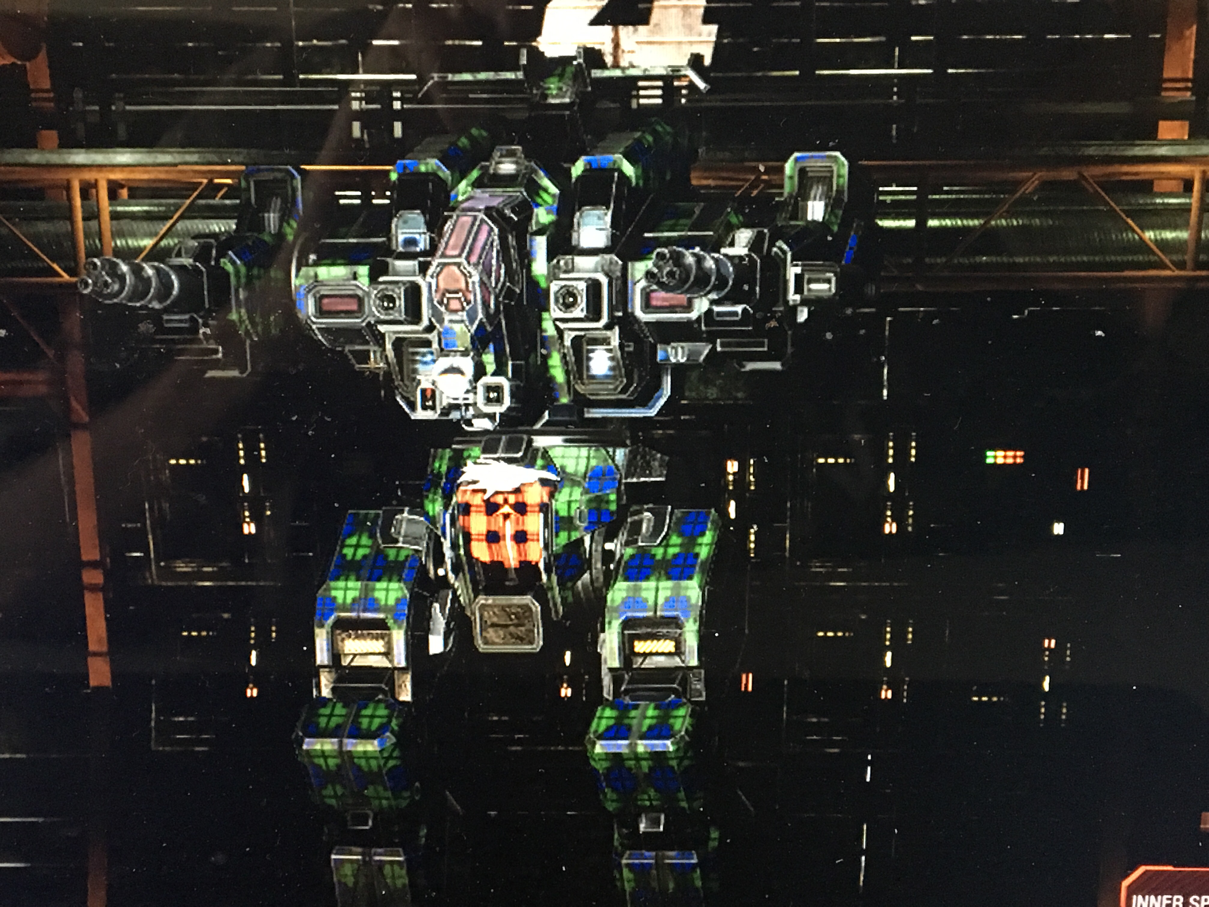
     Formed from former Mechwarriors of the FWL, and the LC, the Polarian Fusiliers are a wild, fairly affordable merc company under the hedonistic leadership of Patrick Wilde. Primarily based on the world of Polari within the Magistracy of Canopus, the Fusiliers will serve almost anyone for the right pay. Mostly fighting in the petty wars that wrack the FWL as well as having fought alongside the CCAF in throwing back Davion invasions. The Fusiliers are an eccentric group made up of dishonerably discharged veterans, pornstars that themselves were scions of noble houses, cast out in disgrace for their lifestyle choices, and other misfits. All welcomed with open arms by Wilde and formed into an unconventional but effective fighting unit. Their mechs are Canopian green with the company's signature symbol emblazoned on their mechs: a pair of hot pink lips. 

A lance of Polarian Fusiliers aiding Steiner forces during the FedCom Civil War.

Dougall's Dark Thanes

      Composed of exiles from Northwind, the Dark Thanes are a mercenary company with a fearsome reputation. Stubborn to a fault even beyond that of their kin, the Northwind Highlanders themselves, they follow the renowned Mechwarrior Dougall MacLaine, of Clan MacLaine of Northwind. Exiled from the planet for dealing treacherously with a rival clan, Dougall took his mech and travelled the IS serving various Houses including fighting for a stint in the Skye Rangers, as well as making a name for himself in the arena on Solaris VII before returning to Northwind to recruit fellow outcast Highlanders for his own mercenary band, the Dark Thanes. They have a reputation for ferocity and have made a name for themselves as a unit that will hold a fortress against enemies three times their number. Black painted mechs with the Mechwarrior's clan tartan adorn each mech, giving the whole company a grim appearance in the heat of battle. Recently, due to their heroic actions against the Clan Jade Falcon, the Clan Elders of Northwind have allowed the Dark Thanes to bear the coveted Northwind Highlander's armorial on their mechs in gratitude for saving the regiment during the Siege of Innisgael. Katrina Steiner also gifted Innisgael to Dougall in gratitude for repelling Jade Falcon forces from this portion of Lyran space. Rather than retire to his newfound wealth though, Dougall still travels the IS at the head of the Dark Thanes, using Innesgael as a valuable base from which to strike at the enemies he's paid to fight. 

A Dark Thane Rifleman, belonging to one Alisdair Campbell. 


Monday, June 12, 2017

Redmond's Reasons Part III, the Night Battle

     Although this battle took place in the late evening of January the 12th, 17-- the combatants gave it various names such as the Siege of Fort St Phillip, or more famously, the Night Battle. It had by turn of events, a rather profound effect on the course of the war up to that point. Namely, the acquisition of that part of the Lorraine by the forces of His Majesty, King George II, and a singular commanding position from which to anchor the assault against Louis XV's armies in both Germany and France. What follows is a brief synopsis of the pivotal battle which Mr. Redmond Barry, Esq. had doubtless taken part....

 
Evening of January 12th, the Duke of Ely leading the British army advances toward the river crossing and to the fort, while the Prince d'Rhone directs artillery to fire on the British to little effect.

 
Sundown, the British Dragoons gallop towards the La Sarre regiment holding the ford, thundering into their ranks and causing much havoc, as the French artillery suffer an early panic in morale and lose several men to cowardice! (Luck of the draw on the card deck)

 
The next turn the French gunners rally and send shells flying into the midst of the British column. Barry's regiment takes a dreadful hit.

 The French artillery fire throws the column into confusion and the men delay advancing a turn while the officers sort out the mess.
 
Poor supply planning leaves one of the regiments without powder so they cannot shoot this turn. Which really doesn't matter since they are in column of march!

 
The fighting grows fiercer around the river ford, more British Dragoons from the rear attack De Clare's Irish regiment, slamming into them with great ferocity as the dragoons are Ulster Scots.

The Royal Guards regiment holds the fort.


Another artillery barrage strikes the rear of the column.

 
The British Dragoons charge off the field after the routing French regiments one after the other. The Irish Wild Geese are the last to break and flee, pursued by the Inniskilling Dragoons.


The Regiment De Berry begins to back off towards the road in an orderly retreat, which quickly turns into a rout as they take heavy fire from the British line.

 
High tide of the battle, the British advance is slowed as the French are driven off the field but the tangle of woods leaves units mixed up and stranded, His Grace calls a halt until the matter is sorted out. The Prince retreats to the fort and directs artillery to the center of the British line.

 
The Duke orders a general advance to take the fort.

The French artillery routs while the Royal Guards hold their ground. A call for surrender is made and the Prince, after some deliberation, surrenders the fort to the Duke in exchange for safe conduct to French lines.

 
The Duke of Ely graciously accepts the surrender of Fort St Phillip from the Prince d'Rhone.